In this issue, we introduce the project’s vision, objectives and expected impact, and explore the challenges driving the need for integrated terrestrial and non-terrestrial connectivity. We also look back at two important milestones: the ENTENTE kick-off meeting and the project’s participation in the first Space Partnership cluster event.
ENTENTE at a Glance
Motivation & Vision
 Reliable and resilient connectivity is becoming increasingly important for mission-critical, governmental, mobility and operational services. Yet, terrestrial networks (TN) cannot provide ubiquitous coverage, particularly in remote, rural and maritime areas or where infrastructure is unavailable, limited or disrupted.
Non-terrestrial networks (NTN) can complement terrestrial infrastructure by extending coverage and providing an additional layer of connectivity. Integrating TN and NTN, supported by 3GPP-standardised technologies, can enable more flexible, ubiquitous and resilient communication services.
This is particularly relevant in the European context, where initiatives such as IRIS² aim to strengthen secure and resilient satellite connectivity while supporting European strategic capabilities.
Against this background, ENTENTE addresses the practical challenges of integrating terrestrial and satellite connectivity into a unified system. The project will develop and demonstrate a multi-connectivity solution capable of combining TN and NTN links, with intelligent traffic steering, switching and splitting according to service requirements and changing network conditions.
What ENTENTE Is Developing
ENTENTE is developing an end-to-end TN–NTN multi-connectivity architecture, bringing together:
- Ka-band flat-panel antenna with RF chains and antenna control unit (ACU);
- Dual-mode TN–NTN modem supporting terrestrial and satellite connectivity;
- Multi-connectivity mechanisms for traffic steering, switching and splitting, including ATSSS-based approaches;
- Mobility- and service-aware connectivity management for reliable operation in dynamic conditions;
- Cloud-native and distributed network functions capable of adapting to service requirements;
- Progressive validation from laboratory testing to in-orbit demonstration, with the ambition of reaching TRL 7 for the terminal and network architecture.
Key Objectives
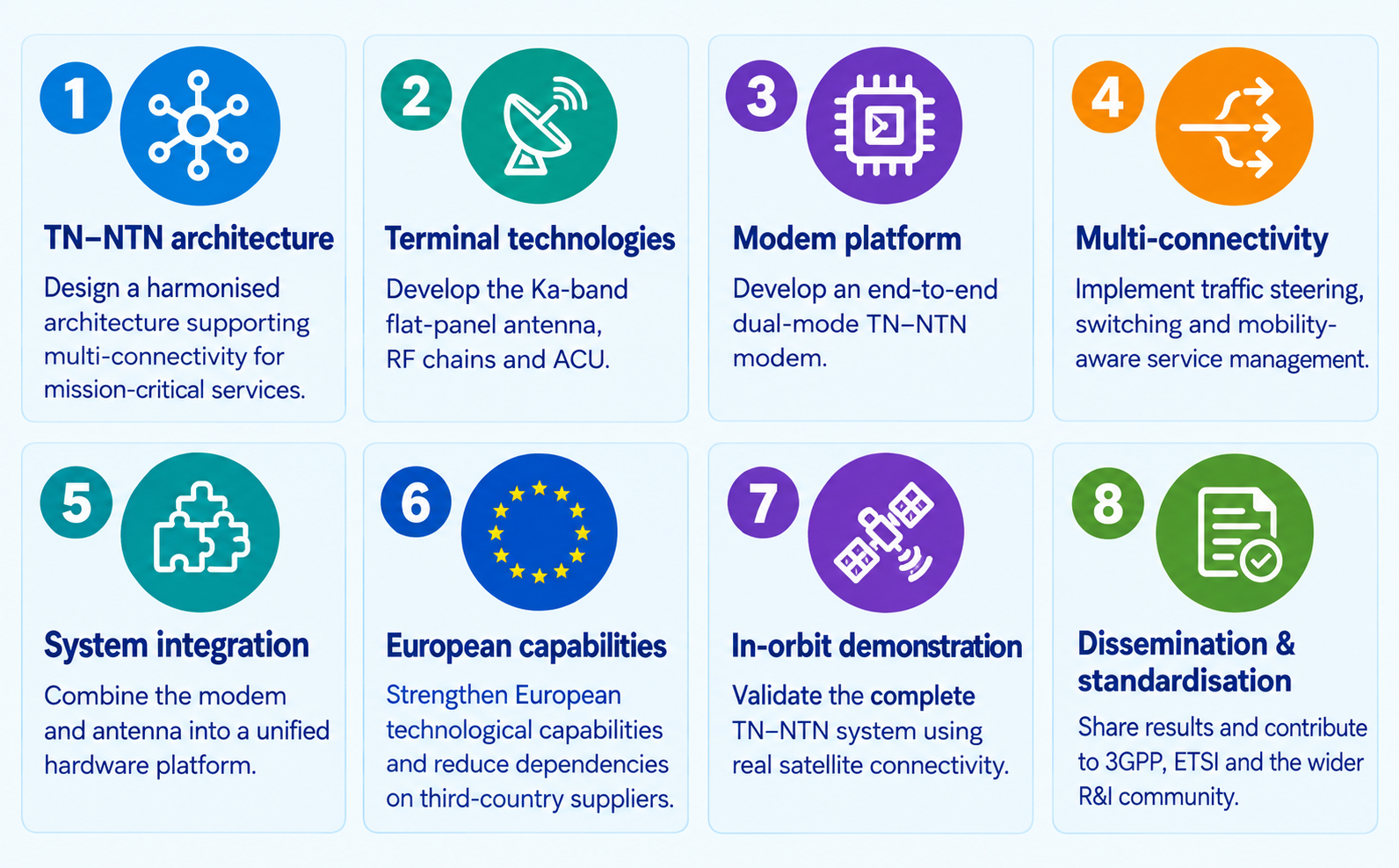
The project will focus on eight complementary objectives:
Expected Impact
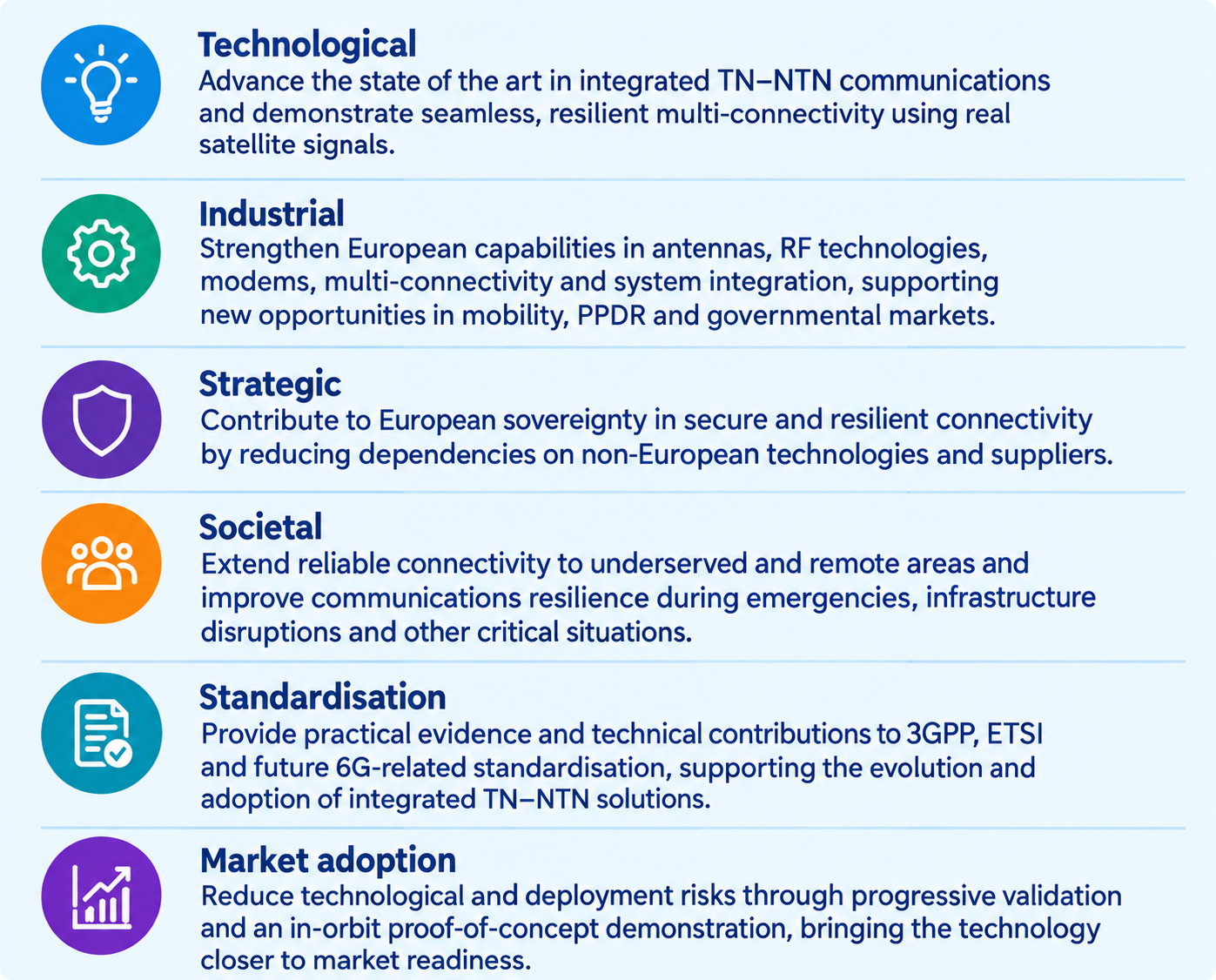
More connectivity, more opportunities and a stronger Europe.
ENTENTE Project Officially Underway
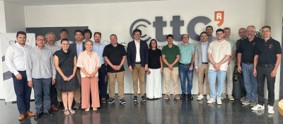 The ENTENTE project officially kicked off on 14–15 July at CTTC, bringing together the consortium partners for two days of collaboration, planning and technical discussions.
The kick-off marked the beginning of the project’s work towards developing integrated terrestrial and non-terrestrial connectivity for Europe. Partners aligned on the project’s vision and objectives, established the roadmap for upcoming activities, and coordinated the technical, management and communication plans that will guide the project throughout its implementation.
The meeting also included a visit to CTTC’s research laboratories, giving partners the opportunity to discover the facilities and expertise that will support ENTENTE’s research and innovation activities.
With the project now officially underway, the consortium has established a strong foundation for collaboration and is ready to begin the development and validation of the project’s TN–NTN technologies.
Meet ENTENTE Consortium
ENTENTE brings together eight European partners with complementary expertise spanning telecommunications, satellite communications, space technologies, research, antennas, modems and network integration:

ENTENTE at the Space Partnership Cluster Event
 On 1 September, ENTENTE participated in the first Space Partnership projects cluster event, organised by the European Health and Digital Executive Agency (HaDEA) and SPACE AISBL.
The event brought together the first projects funded under the Space Partnership to exchange on their activities, technologies and expected contributions to Europe’s space ecosystem.
ENTENTE participated in the session dedicated to preparing demonstration missions for collaborative Earth Observation and satellite telecommunications, presenting the project’s concept and objectives, key technologies and innovations, alignment with the SRIA Technology Roadmap, and expected European impact.
The event provided a valuable opportunity to showcase ENTENTE’s contribution to the integration of terrestrial and non-terrestrial networks (TN–NTN) and to exchange with other projects working towards innovative and resilient space-based connectivity solutions.